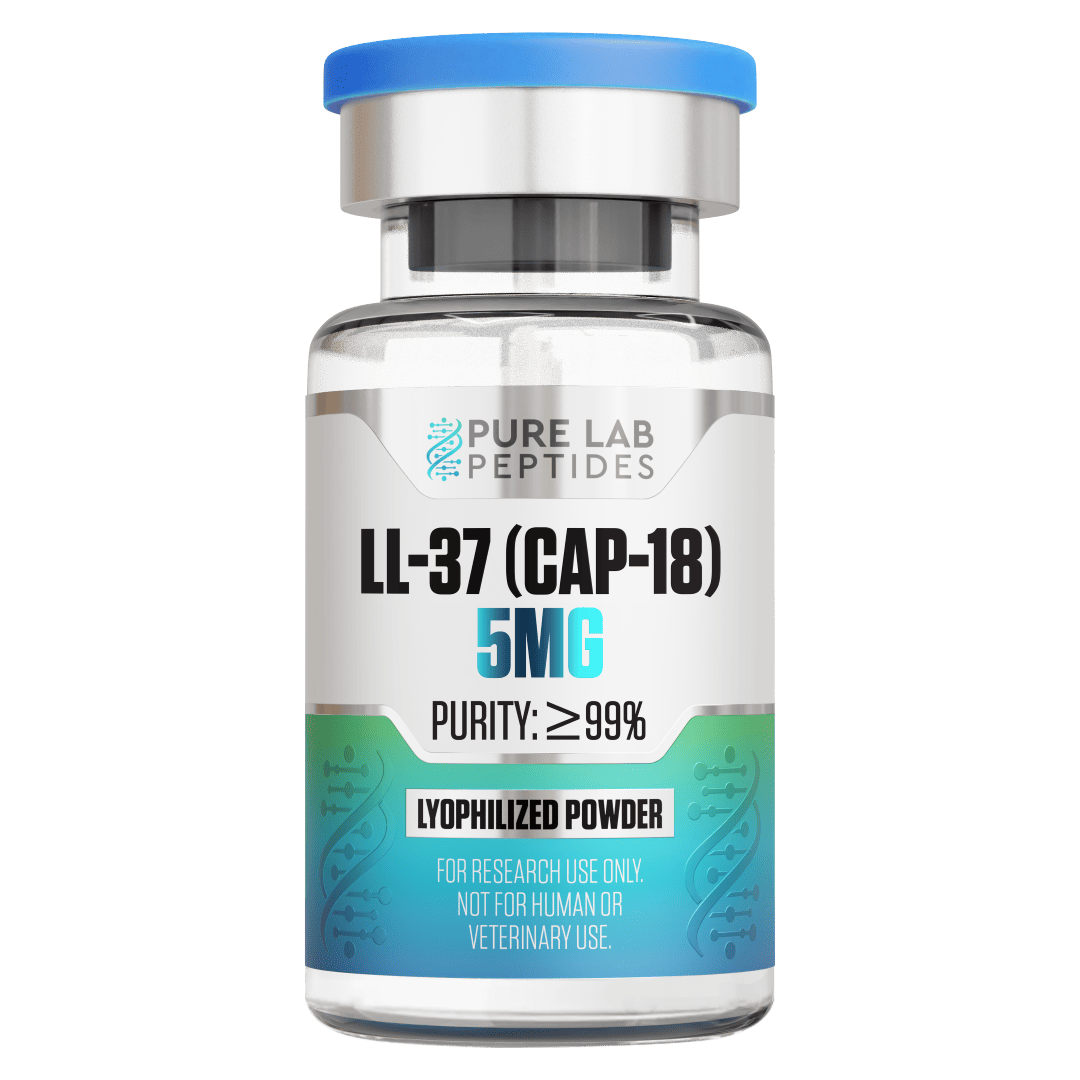
LL-37, also known as CAP-18, is a naturally occurring antimicrobial peptide derived from the human cathelicidin precursor protein hCAP18. It is widely studied in laboratory research because of its interactions with microbial membranes, cellular signaling pathways, and components of the innate immune response. LL-37 5mg (CAP-18) is supplied as a research material for qualified laboratory and scientific investigations.
LL-37 belongs to the cathelicidin family of host-defense peptides. In experimental settings, researchers investigate its structural characteristics, molecular interactions, and biological activity using a variety of in-vitro research models. Studies involving LL-37 have examined its relationship with microbial membranes, lipid structures, inflammatory signaling, chemotaxis, and cellular responses. These research areas make LL-37 a subject of interest across peptide science, microbiology, molecular biology, and immunology.
The LL-37 peptide sequence is commonly investigated for its amphipathic structure and interaction with negatively charged biological membranes. Researchers may use purified peptide material when studying peptide-membrane interactions, molecular mechanisms, protein and lipid binding, or related biochemical processes. Experimental results can vary according to peptide preparation, concentration, experimental conditions, cell model, and analytical methodology.
The 5mg format provides a defined quantity of LL-37 research material for laboratory applications. Appropriate handling, storage, preparation, and experimental procedures should always be determined according to the requirements of the specific research protocol and laboratory environment. Researchers should consult the relevant product documentation, certificate of analysis, and applicable institutional procedures before beginning experiments.
From an SEO perspective, LL-37 5mg (CAP-18) can be described using relevant research terminology such as LL-37 peptide, CAP-18, cathelicidin peptide, antimicrobial peptide research, host-defense peptide research, and peptide laboratory studies. These terms help distinguish the product from unrelated peptide categories while accurately reflecting its scientific research context.
LL-37 research continues to contribute to the broader understanding of host-defense peptides and their molecular properties. Researchers studying innate immunity, peptide biochemistry, membrane biology, microbiology, and cellular signaling may encounter LL-37 in scientific literature and experimental research.
This product description is intended for informational and research purposes. LL-37 5mg (CAP-18) should not be presented as an approved medicine, dietary supplement, or treatment for human disease. Laboratory personnel should follow applicable regulations, institutional requirements, safety procedures, and manufacturer documentation when working with research peptides.
For accurate identification and experimental planning, researchers should verify the peptide name, sequence, quantity, purity specifications, storage requirements, and analytical documentation associated with their particular LL-37 5mg (CAP-18) preparation. Reliable characterization and appropriate laboratory controls are important when evaluating peptide materials in scientific experiments.
LL-37 5mg (CAP-18) therefore represents a defined peptide research material for investigators interested in studying cathelicidins, antimicrobial peptide biology, peptide-membrane interactions, and related molecular mechanisms. Its use should remain within appropriately controlled laboratory research environments and should be guided by established scientific protocols.



Reviews
There are no reviews yet.